
If you have been dealing with a stubborn injury that does not seem to be improving, you are not alone. Tendon problems, heel pain and chronic soft tissue injuries are among the most frustrating conditions to manage, largely because they can linger for months and respond poorly to rest alone. Shockwave therapy is a treatment that takes a different approach, and for many people it marks the turning point in their recovery.
How Does Shockwave Therapy Work?
Shockwave therapy uses high-energy sound waves delivered to the affected area through a handheld device. These sound waves stimulate blood flow, encourage the body’s natural repair processes and have a direct pain-relieving effect on the treated tissue. Rather than masking the problem, the aim is to prompt the body to heal itself more effectively.
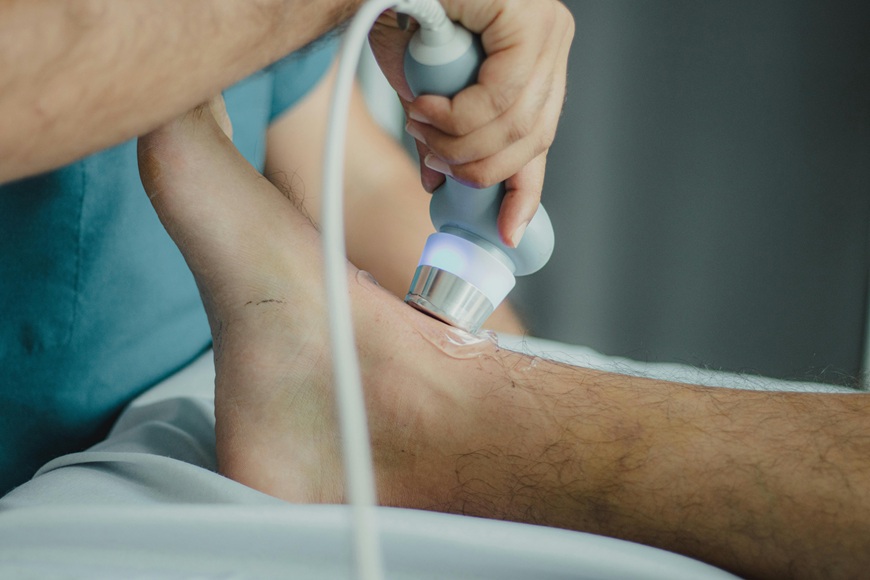
This makes it particularly well suited to conditions where the body has essentially stopped trying to repair the damage. Chronic soft tissue injuries often reach a point where the normal healing response stalls, leaving the affected area painful and restricted for extended periods. Shockwave therapy essentially restarts that process.
What Is Shockwave Therapy Used For?
Shockwave therapy is used to treat a range of musculoskeletal conditions, most commonly those involving tendons, connective tissue and areas of chronic pain. It is one of the most effective options available for conditions that have not responded well to other treatments, including:
- Plantar fasciitis and heel pain
- Achilles tendinopathy
- Tennis elbow and golfer’s elbow
- Patellar tendinitis
- Shin splints
- Calcific tendinitis
- Chronic neck, shoulder and back pain
It is worth noting that shockwave therapy is not just for sports injuries. While it is widely used by athletes and active individuals, it is equally suitable for anyone dealing with persistent pain from everyday wear and tear, work-related strain or postural issues.
What to Expect During Treatment
Most patients need between three and five sessions, with each one typically lasting around fifteen to twenty minutes. During shockwave therapy treatment, you may feel some mild discomfort as the sound waves are applied, but this is manageable and the intensity is adjusted to suit each individual. Many patients notice some relief even after their first session, though the full benefit tends to build over the course of treatment.
There is no downtime in the way you would expect with a surgical procedure, and most people are able to return to their normal daily activities on the same day.
Can You Exercise After Shockwave Therapy?
This is one of the most common questions people have, and the honest answer is that it depends on the condition being treated and how your body responds. As a general guide, it is advisable to avoid high-impact or strenuous exercise in the 24 to 48 hours following each session. The treatment stimulates an inflammatory response in the tissue as part of the healing process, and pushing through intense activity too soon can interfere with this.
That does not mean you need to stop moving entirely. Low-impact activity such as walking or gentle stretching is usually fine, and your therapist will give you specific guidance based on your individual circumstances. The goal is to support the recovery process rather than hinder it, so it is worth being patient during this period even if you are feeling better.
If you experience any discomfort directly after treatment, avoid anti-inflammatory medication for the first 24 hours. This is because the therapy works by triggering an inflammatory response, and interfering with that process can reduce its effectiveness. Heat or cold treatments and gentle movement are better options for managing any temporary soreness.
Why Shockwave Therapy Works Well for Persistent Injuries
One of the reasons shockwave therapy has become so widely accepted in clinical practice is that it offers a non-surgical route to recovery for conditions that would otherwise be difficult to treat. It is clinically proven, endorsed by the National Institute for Health and Care Excellence (NICE) and recognised by professional sports organisations worldwide.
For people who have tried rest, physiotherapy, anti-inflammatory medication or other treatments without lasting success, shockwave therapy is often the missing piece. It addresses the underlying tissue rather than simply managing symptoms, which is why the results tend to be more durable.
Is Shockwave Therapy Right for You?
Shockwave therapy is suitable for most people dealing with chronic soft tissue injuries or persistent musculoskeletal pain, but it is not appropriate for everyone. A thorough assessment before treatment begins is important to make sure it is the right option for your specific condition. Certain situations, such as pregnancy, active infection in the area or specific underlying health conditions, may mean an alternative approach is more suitable.
If you have been managing an injury that is not improving as you would hope, it is worth having a conversation with a qualified therapist about whether shockwave therapy could support your recovery.
Shockwave Therapy at Morley Chiropractic Clinic
At Morley Chiropractic Clinic, we offer shockwave therapy as part of a broader approach to musculoskeletal health and injury recovery. If you would like to find out whether it is the right treatment for you, get in touch with our team or book an assessment and we will be happy to talk you through your options.