
Remedial massage relieves muscle tension and stress by easing tight muscles, boosting blood flow to the affected area and triggering the body’s natural relaxation response. This combination helps loosen stiff tissue, reduce pain and calm the nervous system, making it a popular choice for anyone whose muscle tension and stress have built up over time.
If you often find your shoulders creeping up towards your ears or your jaw clenching without noticing, you’re not alone. We look at why stress causes muscle tension in the first place, how massage helps and what else you can do to release it.
What Are the Symptoms of Stress-Induced Muscle Tension?
When we’re stressed, the body’s fight or flight response kicks in, causing muscles to contract in readiness to react. If stress continues over a long period, those muscles can stay partially contracted rather than relaxing back down. This is part of how stress affects the body more broadly.
Common signs of stress-related muscle tension include:
- Tightness or stiffness in the neck, shoulders and back
- Jaw clenching or teeth grinding
- Headaches, particularly tension headaches
- Muscle cramps or spasms
- Fatigue and disturbed sleep
- A general feeling of being unable to relax
Muscle tension and anxiety often overlap, which is why it can be hard to tell whether tight muscles are down to physical strain, emotional stress or a mix of both.
How Does Remedial Massage Relieve Muscle Tension and Pain?
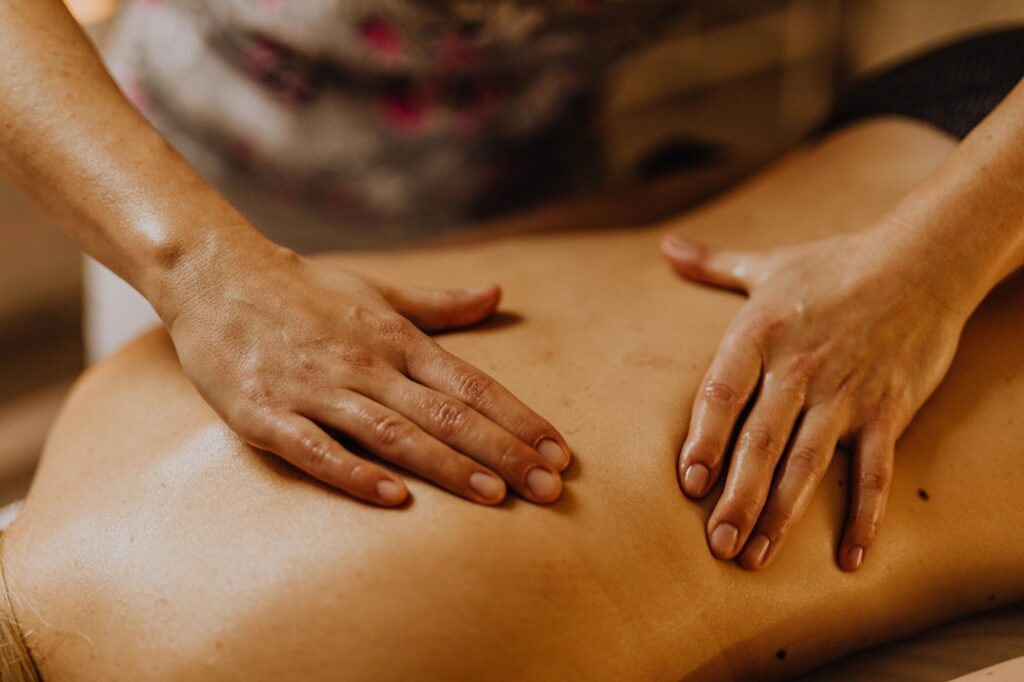
Remedial massage works on both the body and the nervous system, which is part of why it’s so effective for stress-related tension as well as pain from injury or overuse.
Physically, remedial massage techniques such as kneading and applying pressure help to:
- Increase blood flow and oxygen to the muscles, supporting the body’s natural repair process
- Reduce short-term muscle stiffness, with research using ultrasound imaging showing a measurable drop in muscle stiffness immediately after treatment
- Ease muscle spasms by helping separate and loosen muscle fibres
- Reduce the formation of trigger points, the small tight knots that often form within tense muscle
On the nervous system side, remedial massage encourages the body to shift out of its stressed, fight or flight state and into a calmer, more relaxed one. This is often referred to as the relaxation response, and studies have linked it to lower heart rate and blood pressure alongside reduced muscle tension.
Remedial massage can also help break the cycle where pain leads to tension, and that tension then makes the pain worse. By easing the initial discomfort, it can help stop this pattern building up further.
How Long Does Stress-Related Muscle Tension Last?
This depends on the type and length of the stress involved. Muscle tension linked to a single stressful moment, such as a difficult meeting or a near-miss on the road, tends to ease once the situation has passed and the body’s stress hormones settle back down.
Ongoing or chronic stress is different. If the underlying stress continues unresolved, the muscles have little chance to fully relax, so tension can persist for weeks or months rather than easing on its own. This is often when people start to notice knots, stiffness or tension headaches becoming a regular occurrence rather than an occasional one.
How Often Should You Get a Massage for Ongoing Tension?
This varies from person to person, depending on how long the tension has built up and how it responds to treatment. Some people find a single session brings noticeable relief, while others with chronic tension benefit from a short course of regular sessions to keep on top of it.
Our team can talk you through what’s likely to work best for your situation during your first appointment, so you’re not guessing at how often to come back.
How to Release Tension and Stress in the Body
Alongside massage, there are a few things that can help manage everyday muscle tension:
- Gentle stretching, particularly for the neck and shoulders, to help lengthen tight muscles. A foam roller can also be useful for working through tightness between sessions
- Regular movement, such as short walks or a change of position if you sit at a desk for long periods, since tension often builds up from overworking and poor posture
- Deep breathing, which can help calm the nervous system in the moment
- Staying hydrated, as dehydration can make muscles more prone to cramping and tension
- Heat, such as a warm bath or heat pack, to help loosen tight muscles before stretching
These measures can help in the short term, but if tension keeps returning, it’s worth addressing it with a more targeted, hands-on treatment such as remedial massage. This is especially worth doing if the tension is affecting your sleep, mood or daily movement.
How Soon Should You Get a Massage After a Muscle Strain?
This depends on the severity of the strain. With mild to moderate strains, gentle massage can be introduced once the initial inflammation has started to settle, often after the first couple of days. In the early stages, rest, ice, compression and elevation are usually the first port of call. At this stage, massage can support the muscle’s natural repair process.
For more severe strains, or if you’re not sure how serious the injury is, it’s best to get it assessed by a professional before booking a massage. More significant tears need a different approach to recovery.
If you’re dealing with general muscle soreness from exercise rather than an acute strain, massage can be helpful much sooner and is often used shortly after activity to help ease stiffness.
When to Check with a Professional First
Massage isn’t suitable for everyone in every situation. It’s best to check with your GP before booking if you have any of the following:
- An unexplained lump, swelling or bruise
- A fever or active infection
- A skin condition in the area to be massaged
- A recent injury, surgery or fracture
- A diagnosed blood clot or circulation condition
If you’re ever unsure whether massage is right for you, feel free to ask us when you get in touch.
Ease Muscle Tension and Stress with Remedial Massage
Whether your tension has built up gradually from stress or come on suddenly after a strain, our experienced team at Morley Chiropractic Clinic can help you find the right approach. Contact us today to find out more or to book an appointment.